

EVENTS
Panel at "Periodicals and the World" (Afropress Team)
Date: 9/9/2026 | Time: 11 am | Place: Auditorium, Royal Library of Belgium
African Print Cultures: Conformism, Conflict, Critique
Periodicals provide a critical site for cultural and political debate. During the first half of the twentieth century, the Sub-Saharan African periodical press underwent significant changes, with magazines reinventing themselves and new ones emerging in response to changing socio-political circumstances. Sub-Saharan African magazines had intricate ties to colonial and Cold War power structures and their institutions, such as missions, translation bureaus and universities. At the same time, these periodicals provided a vibrant space for the critique of these same institutions and informed a political and cultural awakening across the region. The diversity of these print cultures is striking. Not only did the different publications in this landscape portray various ideological positions, but the heterogeneity of the periodical form itself allowed individual publications to negotiate between conformism and critique.
The Afropress team will present ongoing research in the AFROPRESS ERC project, which examines Sub-Saharan African periodicals from a transnational perspective. Turning specifically to Madagascar, the Congos, Uganda and South Africa, they will explore how periodicals bring together seemingly contradictory discourses in periods of complex sociopolitical transformation.
Talk on "Olive Schreiner" (Cedric Van Dijck)
Date: 28/8/2026 | Place: University of Western Cape, South Africa
"Properly Remembered": Olive Schreiner in the 1950s
This talk explores the piqued interest in the life and work of Olive Schreiner in the late 1950s and 60s — a period when the last remaining witnesses committed their memories of the novelist to paper. In particular, I aim to reconstruct the efforts of Zelda Friedlander (in Cape Town) and William Plomer (in London) to rescue Schreiner from oblivion or insignificance. Based on their correspondence, kept today in the university archives at Durham, my paper explores the slow and difficult process of publishing Friedlander’s early volume of reminiscences, Until the Heart Changes: A Garland for Olive Schreiner (1967) — in her words “the last personal record of this remarkable woman” (Durham, PLO/72/1). “There is no danger of Oliver Schreiner being forgotten,” Plomer wrote her, after another set-back in the project, “what you are doing is to make sure that she is properly remembered, and that is a fine thing to do” (Durham, PLO/252/13-47). This paper is interested in the politics of ‘properly remembering’. By reconstructing this early biographical project, alongside similar efforts such as Plomer’s book reviews, Friedlander’s radio broadcast “Olive Schreiner at De Aar” (1955) and Uys Krige’s Olive Schreiner: A Selection (1968), I ask how and why the 1950s and 60s was marked by such a renewed interest in Schreiner.
Talk on "East African Literary Networks" (Rikus van Eeden)
Date: 11/8/2026 | Time: 11:35 am | Place: University of Nairobi, Kenya
Bigger than Uganda? Reading the imagined geographies of Transition's first decade
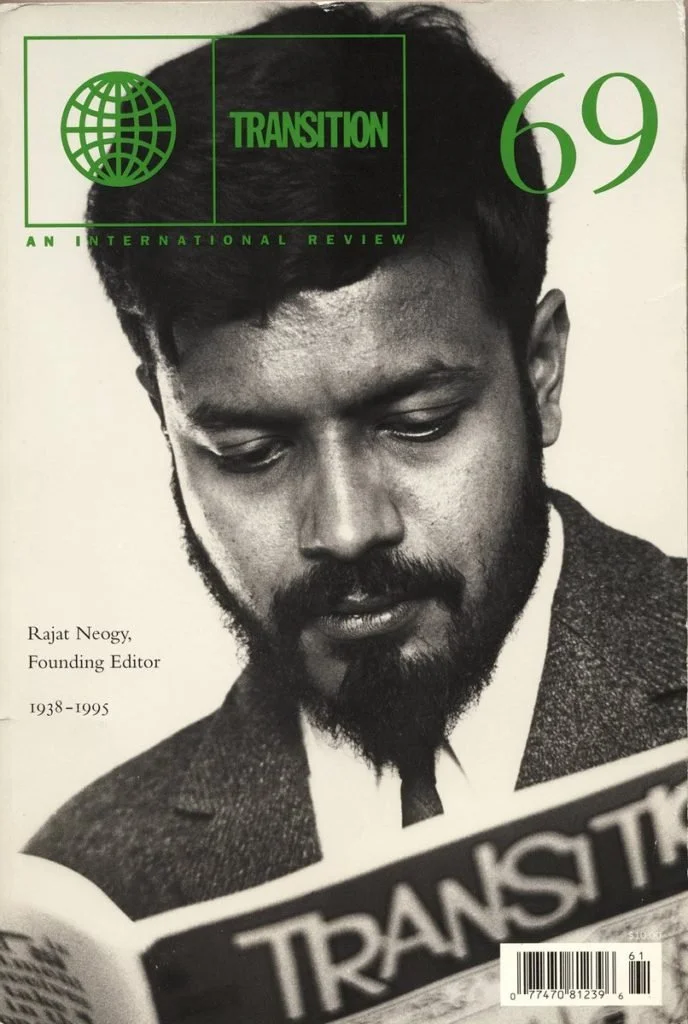
In 1968, the government of Milton Obote cracked down on Transition, a cultural magazine based in Kampala since 1961, forcing it into exile in Accra. Obote remarked that the magazine was being debated “as if it were bigger than Uganda, although Uganda was not all that small” (Transition 38, 1971). From its first issue, Transition projected itself beyond national borders, framing its mission around the question “What is East African?” (Neogy, 1961). As its readership expanded, so too did its spatial imaginaries. The magazine was highly self-referential, staging its own circulation and reception as evidence of a ‘global’ presence—through letters from international contributors and reprints of foreign reviews. Nevertheless, Transition was situated in the specific ‘Afropolitan’ (Mbembe, 2020) milieu around Makerere University (Wa Thiong'o, 2016). Its global projection was thus uneven and sustained by a distinct translocal network, that included foreign students and exiles.
At a moment when decolonization was being concretised as national independence, Transition often bypassed the national frame in favour of regional and transnational orientations. This paper examines the magazine’s shifting geographical imaginaries between 1961 and 1971. Following Eric Bulson’s (2007) conception of periodical spatiality, I analyse not only Transition’s ‘objective’ circulation but also its internal representations of space and place. I show how overlapping imaginaries —local, East African, Pan-African, Anglophone, and ‘global’—are constructed discursively, formally, and materially in its pages.
Particular attention is given to the magazine’s “transplant” from Kampala to Accra. The first Accra issue (1971) reveals a renegotiation of place: “Transition’s home is also all Africa. And it was at home in the world outside” (Neogy, 1971). This moment marks a key step in the magazine’s repositioning of East Africa in its broader re-orientation towards ‘Africa and its diaspora.’ I argue that the development of Transition’s overlapping geographical imaginaries shows a growing ambivalence about the national framing of decolonization (Wilder, 2015).
Talk on "Modernist Magazines in the World" (Cedric Van Dijck)
Date: 1-4/7/2026 | Place: Loughborough University, England, UK
Convening a panel on modernist magazines at the BAMS/MSA conference
Cedric Van Dijck is convening a panel on modernist magazines at the annual Modernist Studies conference. Situated at the intersection of global modernism and periodical studies, the panel turns to the weird world of modernist magazines. Little magazines were containers for much of what was considered strange about modernism as well as in themselves strange material objects. The aim of the panel is to direct our attention to Sub-Saharan Africa, the Caribbean and South America, and to explore how strangeness might offer a way into modernism’s magazine cultures from and, especially, between these places. Taken together, the papers on the panel investigate the unexpected networks, quirky affects and odd materiality of magazines such as Bim, Flor do Mal and Voorslag. Participants include Louise Kane (University of Central Florida), Maria Zirra (Stockholm University), Andy Stafford (University of Leeds) and, as chair, Nissa Ren Cannon (Stanford University).
Talk on the bridewealth debate in Liaison (Tessa van Wijk)
Date: 26/6/2026 | Time: 11 am | Place: University of Alcalá, Spain - session 13C - Revoir l'histoire
Liaison (1950-1960) et le débat sur la dot : la revue congolaise comme médiateur culturel incitant la réforme sociale
Pour les Congolais du XXe siècle vivant sous le régime colonial, la presse périodique leur donnait accès à la sphère publique et la possibilité de s’y exprimer sur des questions sociales et culturelles (voir p. ex. Hunter 2018 ; Tödt 2021 ; Boswell 1987). Pourtant, cette presse était également soumise au contrôle du gouvernement colonial. Des revues comme La Voix du Congolais (Léopoldville, 1945-1959) et Liaison (Brazzaville, 1950-1960) étaient dirigées et créées par des membres de l’élite congolais (les ‘évolués’) des Congos belge et français, mais sous le contrôle colonial. Elles s’inscrivaient dans un modèle européen, souvent adhérant aux valeurs bourgeoises occidentales. Ainsi, leurs contributeurs diffusaient régulièrement des idées européennes traditionnelles et chrétiennes sur la famille et les rôles de genre (voir p.ex. Tödt 2021 ; Nkili 2014 ; Dianzinga 2016 ; Jerónimo 2018 ; Mianda 2002).
Il semble peut-être paradoxal, mais en suivant ce modèle européen et en participant à un processus de « bourgeoisification culturelle », l’élite congolaise était en mesure d’accéder à un espace un peu plus démocratique où elle pouvait s’exprimer sur des questions sociales et les problèmes que rencontrait le peuple congolais (évolué) (Tödt 2021). Cette communication montrera alors, à travers le cas de Liaison et le débat sur la dot dans cette revue, la façon dont les revues congolaises coloniales constituent, en tant que médiateurs culturels, un espace de discussion et d’échange sur des questions sociales importantes liées au genre et à la famille, ainsi permettant aux Congolais évolués de critiquer la société (coloniale) et de réfléchir sur les possibilités de réforme sociale.
Talk on The Politics of Intermedial Connectivity (Rikus van Eeden)
Date: 27/5/2026 | Time: 2 pm | Place: Vrije Universiteit Brussel, Room I.0.05 - Panel 7
Time in Transition: Markers and Meanings of Temporality in an African Magazine
Transition magazine is among the longest running periodicals of Africa and its diaspora. Its long run has, nevertheless, been marked by several breaks. Founded in 1961 in Kampala, it stopped publishing in Uganda in 1968 due to government repression, only to re-establish itself in Accra, Ghana in 1971. After 1975 it went dormant, only to be re-launched in 1991 in the United States, from where it is still published today. Transition’s long though irregular life-span makes it an ideal case study for the temporalities of the periodical form. I focus on these transitional moments of Transition—1961, 1971, 1991—to investigate how it positioned itself in changing times. I argue that Transition situated itself in relation to historical temporalities—of decolonization (1961), postcolonial discontent and foreclosure (1971), and the so-called ‘end of history’ (1991)—not only in terms of content, but also through material and intermedial markers of temporality (in layout, pictures, cover design, etc.) and through strategic (mis)alignment between the issues it covered and the news(papers) of the day. The founding editor Rajat Neogy’s editorials, discussing the life-time of the periodical in terms of an immanent, almost vitalist, temporality rather than external, objective time, will serve as a guiding thread in my analysis—one that will help articulate the relation between markers of time (a periodical reflecting its time) and ‘meanings’ of time (intentional and strategic use of temporal markers, discursive and material, to generate meaning).
Presentation on South African literary culture (Nina Navarro Tellez)
Date: 27/3/2026 | Time: 12 pm | Place: UAntwerp City Campus, Building R - S.R112 (Letterkunde)
Donga and South African literary culture
The little magazine had been crucial for establishing an alternative literary circuit, allowing marginalized voices to express themselves and rebel against the discriminatory circumstances in which they lived. Recent studies on the South African little magazine during the apartheid era have revealed that magazines, like Drum, The New Classic, and Staffrider, created a platform for black literary production and anti-apartheid activism. This paper contributes to this area of study by focusing on Donga (1976–1978), a little magazine that, according to Peter McDonald (2010), was both influential and, more importantly, exceptional. The magazine, founded by two women, defied the apartheid regime and rejected traditional South African literary culture by focusing on a new generation of young African writers who sought to contribute to a common literary tradition, transcending cultural and racial differences through the inclusion of literary works in Afrikaans, English, and Setswana. This study reveals how the literary works brought together by Donga advocated for a shared literary tradition: what were their ideas, aspirations, and ambitions? Whose voices were dominant and deemed as more important? Whose voices were in the background or excluded? Additionally, this study reflects on the influence of Donga on the broader network of South African little magazines, which has been proclaimed but never thoroughly explored, and the lack of research on this magazine. In order to answer these questions, this paper uses the multidisciplinary insights of periodical studies, meaning that it focuses on Donga’s formality and the little magazine as a subversive medium.
Talk on Moroccan Magazine Culture (Chakib Ararou from INALCO Paris)
Date: 26/3/2026 | Time: 4-5 pm | Place: Vrije Universiteit Brussel, ‘Profzaal’ - Meeting Room LW
Al-Thaqāfa al-Jadīda : Cultural Autonomy and Arab Embeddedness in Morocco’s Years of Lead
This presentation analyzes the development of the Moroccan journal Al-Thaqāfa al-Jadīda (1974–1984), founded by the Moroccan intellectuals Muḥammad Bannīs, ʿAbd al-Qādir al-Shāwī, and Musṭafā al-Masnāwī following the prohibition of Souffles/Anfās (1972). Drawing upon Bourdieusian field theory and Pascale Casanova’s framework for understanding World Literature as a hierarchically structured positional space, this presentation traces the trajectory of the journal while jointly analyzing the national and transnational dynamics shaping its development. Within the Moroccan national field, the journal represents a turning point due to the autonomy it asserted vis-à-vis the political field, particularly the Moroccan left-wing parties—whether institutional or clandestine—within whose orbit the most important cultural journals, such as Aqlām and Souffles, had evolved so far. In a context of authoritarian reassertion of state control over the cultural field, the creation of Al-Thaqāfa al-Jadīda was driven by the aim of preserving a space of autonomy for cultural production and research, without alignment with any particular political tendency, while simultaneously redefining a cultural policy in Morocco that stood in competition with that of the state. In terms of transnational circulations, the journal pursued a distinctive strategy grounded in Morocco’s doubly peripheral configuration: a Francophone subfield oriented toward Paris and an Arabophone subfield linked to Mashriqi capitals. As an Arabophone review, Al-Thaqāfa al-Jadīda combined the resources of Moroccan plurilingualism, developing research and criticism informed by contemporary French theory, read in the original, translated, and reworked for Moroccan and Arab contexts. This strategy facilitated more horizontal exchanges with the Arabophone literary area’s avant-garde, notably with Mawāqif, a journal edited in Beirut by Syrian poet Adūnīs.
Lecture on ARCHIVAL DUPLICITY (Rikus van Eeden)
Date: 25/2/2026 | Time: 1 pm | Place: University of the Western Cape
ARCHIVAL DUPLICITY: Anti-Apartheid Periodicals & The Treason Trial, 1956-61
In this seminar, I will discuss the anti-apartheid magazines, journals, and newspapers in the archive of the South African Treason Trial (1956-61), through the lens of duplicity in the double sense of deception and duplication. The trial archive contains duplicates of magazines also found in other archives, but here they take on a specific meaning. While it does not contain the full run of any magazine, it does include multiple copies of certain publications (including ones that are hard to find elsewhere), with each being linked to the reader from whom it was seized, demonstrating how the archive orders not only texts, but also persons (as 'the accused') and their interrelations. The archive also includes two issues of an obscure little magazine called The Young Democrat. Produced by children, it literally mimics and duplicates elements of 'adult' political magazines, such as Fighting Talk, which itself played a double role: featuring both as evidence in the trial and continuing to report on the trial. The defence strategy was also to mimic how state witnesses read periodicals as legal evidence, uncovering the duplicities of meaning and of claims to expertise. I will introduce this archive, highlight some of its contents, and reflect on it by means of a text by the writer Alex la Guma (dramatizing practices of duplication in court and the double relation of periodicals to the trial) and Achille Mbembe's reflections on archiving as ritual practice.
Date: 12/1/2026 | Time: 12:30 pm | Place: Université de Liège
Team Presentation on AFROPRESS
The Little Magazine in Africa: Notes from the Field
We are presenting ongoing work on the AFROPRESS project at the ‘Multilingualism and the Archive’ symposium in Liège, co-organised by CEREP and CLIC. Other speakers include Marta Fossati (Milan), Ashleigh Harris (Uppsala), Alison Donnell (Bristol), among many others. Join us in Liège (room Hedy Lamarr) or online (by registering here).
Lecture on Transition magazine (Rikus van Eeden and Cedric Van Dijck)
Date: 5/12/2025 | Time: 10:45 am | Place: Vrije Universiteit Brussel, D201
Out of Joint: Untimeliness in Transition
Sub-Saharan Africa is often bypassed in global histories and its print cultures seldom approached through a transnational lens. To recover a lost history of global engagement, the AFROPRESS project at VUB turns to the subcontinent’s cultural and political magazines from the period 1918-68 — a vast, yet slowly disappearing archive. These magazines played key roles in effecting change, from fuelling decolonisation to creating literary canons. The AFROPRESS project advances the hypothesis that magazines shaped this transformation through their global orientation, that is, the way they reached out, across borders within and beyond Sub-Saharan Africa, to Black internationalist and anticolonial networks. In this paper, we will present our first findings on the Ugandan case study. We will explore how these initial results may pave the way towards a renewed understanding of the little magazine in Africa as a global phenomenon.
Lecture on AIDS ethnography (Mandisa Mbali, University of Cape Town)
Date: 28/10/2025 | Time: 3pm | Place: LIC learning theatre
Methods at An End? AIDS, Literary Ethnography and Multimodal History in South Africa
It was not so long ago that the rhetoric of a global end to AIDS as thinkable and achievable became dominant in the media and global public health circles. US President Donald Trump’s recent withdrawal of funding from the President’s Emergency Fund for AIDS Relief (PEPFAR) has, however, once more raised the spectre of tens of thousands more new HIV infections and thousands of additional preventable AIDS deaths in South Africa. This lecture focuses on the early 2000s and brings together works of art exhibited at the Durban Art Gallery and South African fiction such as Damon Galgut’s The Promise (considered ethnography) to examine notions of “an end” in three methodological senses: firstly, to explore the ethical and political dilemmas (and desirable “ends”) for historians when they adopt means to examine earlier periods of mass death of people with spoiled identities. Secondly, it explores the expansive possibilities and limitations of simultaneously interpreting sources multimodally, that is, with different creative modes of representation (visual and literary) to understand extreme emotions; namely, abjection both in people shown and described as living with AIDS in the absence of HIV treatment (an end of meaning) and the way in which audiences must grapple with the potential trauma of reckoning with very high rates of suffering where the extremity of the factual seems to border on the surreal (and, even, imaginary). In this sense, it argues that final perfection is improbable both in terms of conquering the epidemic itself (for the foreseeable future) and in terms of obtaining emotional, moral and intellectual finality when it comes to interpreting it as scholars.
Image sources: The New African / Rameau fleuri d’ylang-ylang. BnF, Gallica.